Vienna is one of four cities globally to host a United Nations headquarters. The Vienna International Centre on the Danube is the permanent home of the IAEA, UNIDO, and UNODC, alongside OPEC, the OSCE, and dozens of other international bodies that put the city on the standard rotation for diplomatic, scientific, and corporate gatherings of European or wider scale. Vienna sits in the top tier of European congress destinations on the ICCA rankings year after year, and the local meetings industry is structured around international audiences in a way few other cities in the region can claim.
That has shaped the venue landscape. The buildings that host serious international events here are different from those that host them in Berlin or Munich or Zurich. Some are imperial: palaces and ceremonial halls adapted for modern technical infrastructure, holding 300 years of European political weight in their architecture. Others are purpose-built congress centres engineered for 20,000-attendee scientific congresses with simultaneous translation across a dozen languages. A third group are the discreet, ultra-private venues where the actual diplomatic work happens behind closed doors.
This guide covers seven Vienna venues that work for international corporate events: congresses, multinational summits, sponsor dinners with cross-border guest lists, gala events tied to international association meetings, and product launches aimed at audiences arriving from multiple countries. Capacities range from 200-pax design-led receptions up to 22,800-pax full-scale congresses. They're ordered by scale, descending, so you can shortlist by the size of your event first and worry about everything else second.
1. Hofburg Vienna
Neighbourhood: Innere Stadt (1st district), central Vienna
Capacity: 17,000 m² across 35 rooms; from 50 to 4,900 guests; flagship Festsaal up to 1,210 theatre-style
Best for: International congresses, OSCE-tier diplomatic events, gala dinners and award ceremonies with imperial backdrop
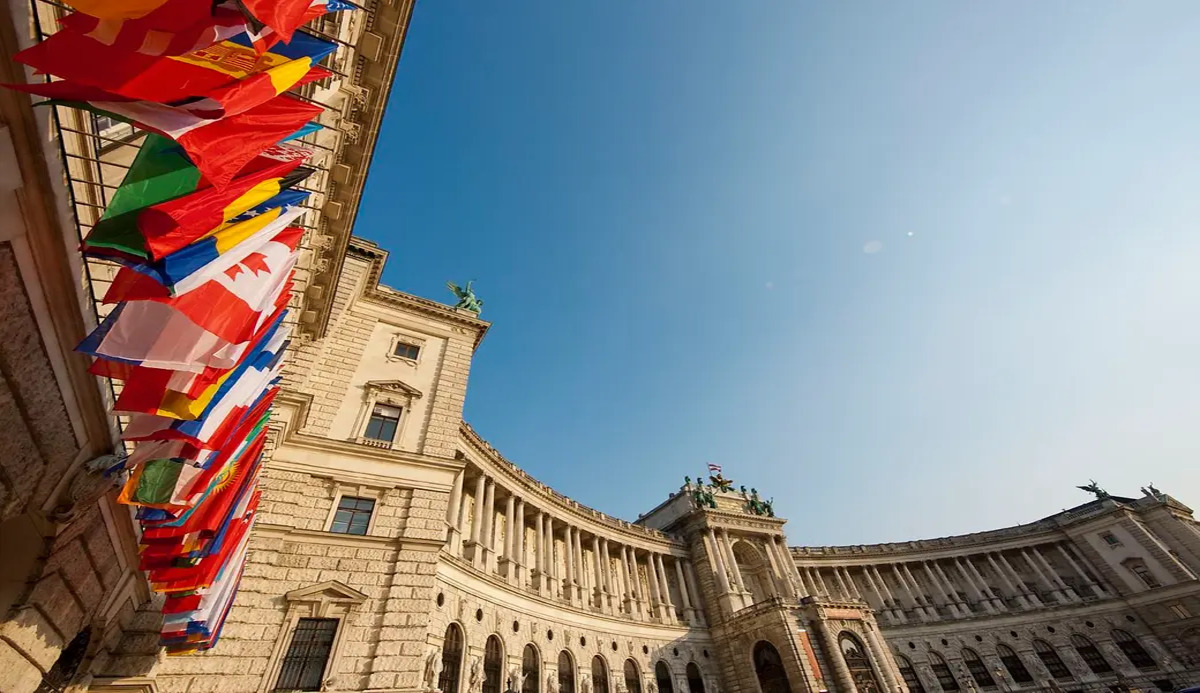
The former winter residence of the Habsburg dynasty is now Austria's flagship congress and event venue. The full Hofburg complex covers around 500,000 m² of palace, 18 wings, and 2,600 rooms; the Hofburg Congress and Event Centre occupies the part of that complex purpose-fitted for modern events, with 35 rooms across 17,000 m² of usable space and capacity from intimate 50-pax board meetings up to 4,900-attendee congresses.
The flagship space is the Festsaal: nearly 1,000 m², 1,210 theatre seats, the kind of room where the architecture itself becomes part of the keynote. Around it sit the Zeremoniensaal (500 cap), the Großer Redoutensaal (700), the Kleiner Redoutensaal (280), the Hofburg Gallery (250), and the Forum (250), plus exhibition areas, press offices, lounges, and cloakroom infrastructure that lets organisers run multi-track congress programmes within a single building.
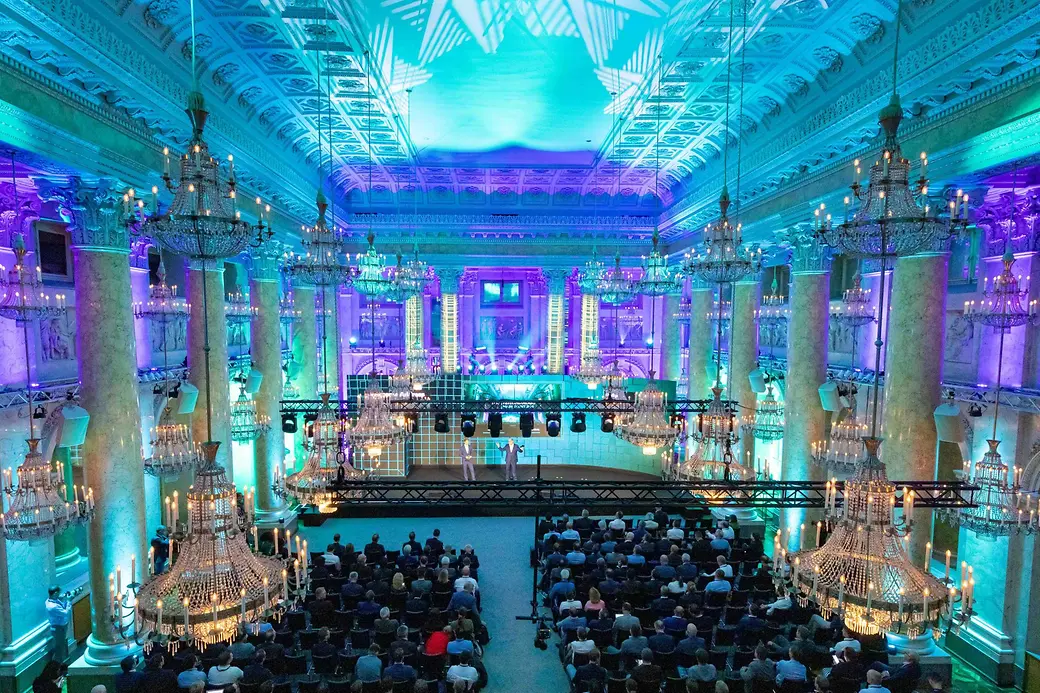
For international corporate events specifically, this is the venue for moments where Vienna's identity is the asset. The OSCE has run conferences here. International association meetings use the Festsaal for opening and closing ceremonies. The combination of imperial architecture and modern AV infrastructure means a multinational audience gets the heritage backdrop they expect from Vienna without losing the technical reliability they need for the actual programme. The venue runs around 300 events per year and ~320,000 visitors, so the operations team has handled effectively every congress format that exists.
Good to know: Multi-room programmes work well because the spaces vary so widely in size, but the building is large and historic, so wayfinding signage and on-site coordinators matter for international audiences.

2. MQ Libelle (MuseumsQuartier Wien)
Neighbourhood: MuseumsQuartier (7th district), on the roof of the Leopold Museum
Capacity: 214 m² indoor event space, up to 200 guests; plus public terrace area
Best for: Design-led cocktail receptions, satellite events alongside larger congresses, brand activations with an architectural backdrop
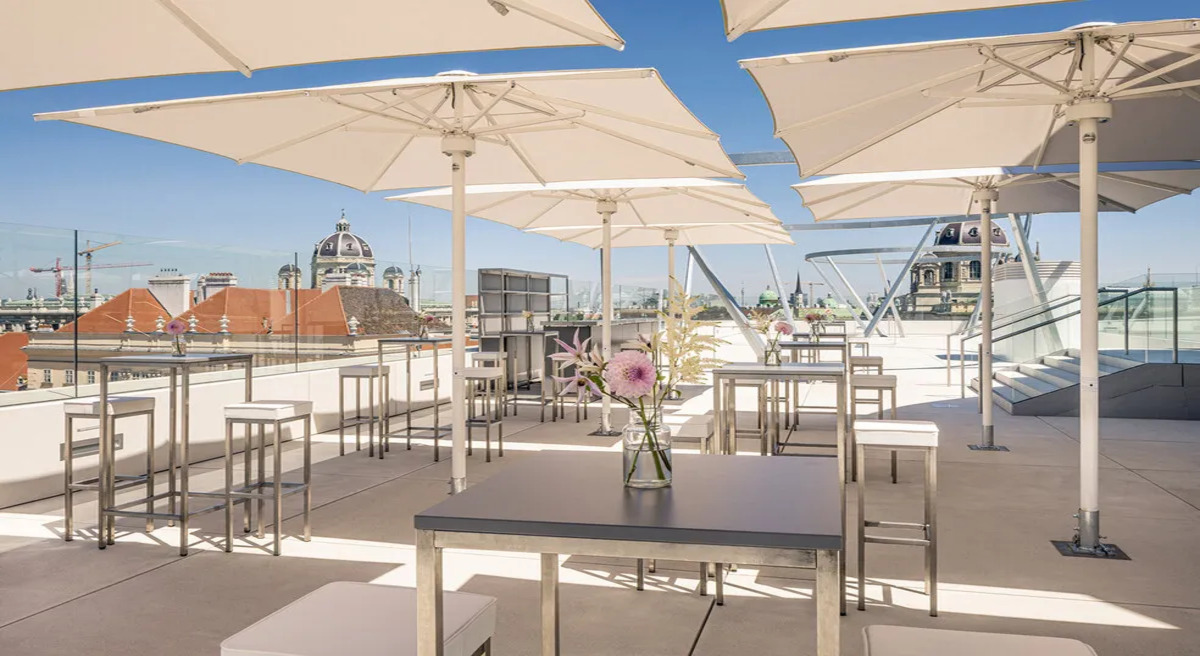
Opened in September 2020, MQ Libelle is the rooftop architectural landmark on top of the Leopold Museum within the MuseumsQuartier, Vienna's largest cultural district and one of the largest in Europe. The building was designed by Laurids and Manfred Ortner, the architects behind the wider MuseumsQuartier itself, and the central design elements were created by two of Austria's most prominent female artists: Eva Schlegel designed the glass wall, Brigitte Kowanz designed the iconic light rings on the terrace. Ortner & Ortner won the Grand Austrian State Prize the same year MQ Libelle opened.
For events, the indoor space holds up to 200 people across 214 m², with the broader public terrace adding panoramic views over the rooftops of central Vienna toward the Kunsthistorisches Museum and the Hofburg. The building's design language is glass, light, and architectural restraint, which makes it a strong match for design-conscious brands that want a contemporary Vienna identity rather than the imperial-heritage version. Access is via two outdoor elevators on the east side of the Leopold Museum.
For international corporate events, MQ Libelle works best as a satellite venue: the design-led cocktail reception that runs alongside a larger congress at ACV or Hofburg, the press launch tied to a wider product programme, the closing-night event for an architecture, fashion, or technology audience that responds to the building's specific aesthetic. The wider MuseumsQuartier offers additional rentable spaces, the Ovalhalle (up to 360 across 298 m²), Arena21 (up to 350 across 275 m²), and the Baroque Suites (up to 100 across 104 m²), which means a multi-format programme can run across the MQ campus without leaving it. The whole complex is Austrian Ecolabel-certified for Green Meetings.
Good to know: As a rooftop space with a public function during the day, MQ Libelle's event windows are typically evening and require coordination with the museum and the public-access programme. The Zur Libelle public bar closes in bad weather, and while the indoor event space is fully covered, brief delegations on the access route since the elevators are external.
Contact us for a tailored venue proposal!
3. Mirage Event Location
Neighbourhood: Prater (2nd district), Motorbootbahn 75
Capacity: Theatrical main hall plus an additional ~150 m² reception space; configured for sit-down dinners, dinner shows, and large cocktail receptions
Best for: Gala dinners with stage programming, immersive product launches, award ceremonies and dinner shows
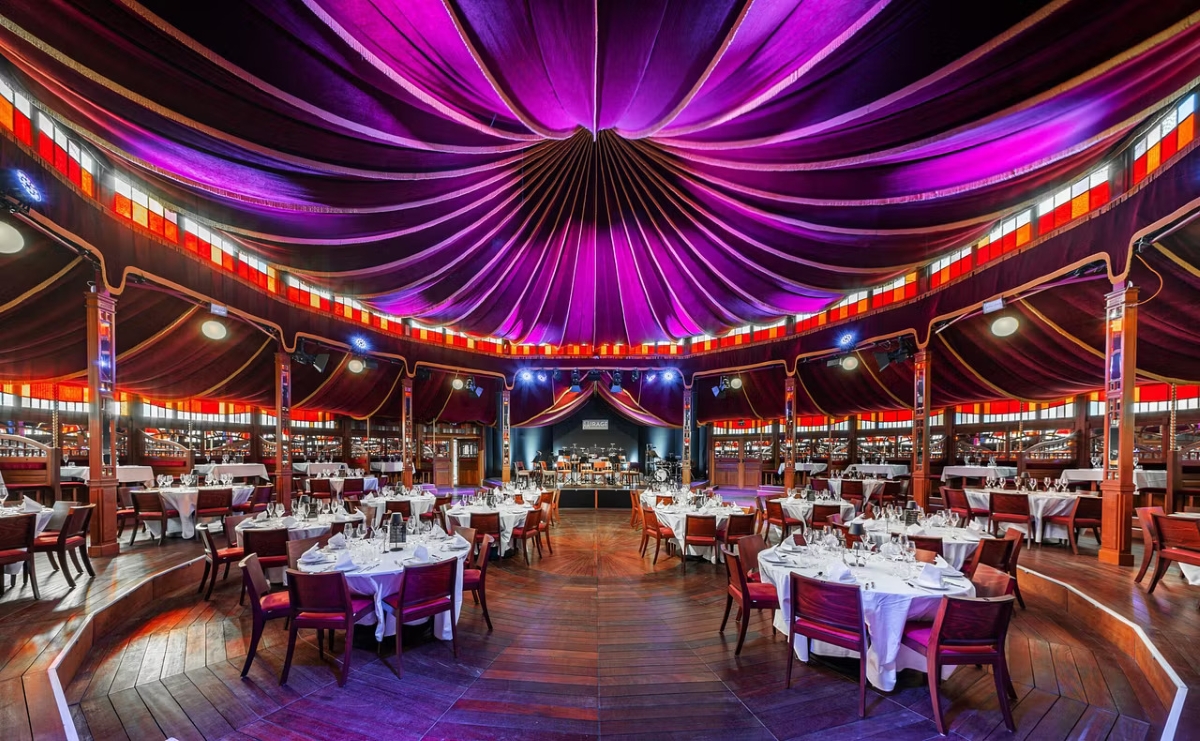
Mirage sits inside the Prater, Vienna's historic park complex on the city's east side, in a building configured around a single architectural idea: cirque-inspired ceilings, theatrical scale, wood flooring, and the kind of lighting infrastructure built into the bones of the venue rather than rigged in for each event. The result is a venue that handles gala dinners, immersive product launches, dinner shows, and large-scale cocktail receptions without the visual flatness that characterises most purpose-built event halls.
Operationally, the venue is built for events with a programme. Dedicated backstage areas and artist dressing rooms mean a gala with live performers, a fashion show, a product reveal with a choreographed unveiling, or an awards programme with a sequence of presenters all run through the venue's existing infrastructure rather than requiring a major build. The acoustics are engineered for live programming rather than retrofitted, which matters when a keynote or live act is the centrepiece of a corporate evening rather than just background to dinner. Beyond the main hall, an additional ~150 m² of space functions as a separate reception area, standing-table zone, or pre-event meeting space.
For international corporate events, Mirage works particularly well for the gala component of a wider programme, the product launch tied to an exhibition or congress at ACV or Hofburg, and any event where the brief is "memorable visual moment" rather than "boardroom-style discussion." The Prater location adds a Vienna-specific identity that distinguishes the venue from generic hotel ballrooms used for the same brief in other European cities.
Good to know: The Prater is a destination park, not a central business district, so for a daytime conference programme this is a poor fit. For an evening event with a defined arrival window, the location works in the venue's favour by making the destination part of the experience.

4. Austria Center Vienna (ACV)
Neighbourhood: Donaustadt (22nd district), directly adjacent to UN HQ (Vienna International Centre)
Capacity: 26,000 m² across 21 halls and 134 meeting rooms on 5 levels; 500 to 22,800 attendees; flagship Hall ABC at 4,320 m²
Best for: Large-scale international congresses, scientific association meetings, multi-day trade events with international exhibitor floors
Austria's largest congress and event centre, and the venue that defines what "international corporate events in Vienna" actually means in practice. ACV sits directly next to the UN's Vienna International Centre on the Danube, which puts it in the same urban cluster as the IAEA, UNIDO, UNODC, the Comprehensive Nuclear-Test-Ban Treaty Organization, and the rest of Vienna's international diplomatic infrastructure. The building was designed for international congresses from the ground up.
The scale is industrial. 21 halls. 134 meeting rooms. Five levels. 26,000 m² of event space. The flagship Hall ABC alone is 4,320 m². For context, recent and upcoming bookings include the European Geosciences Union General Assembly (a ~20,000-attendee scientific congress that returns annually), the European Association of Nuclear Medicine annual congress (8,600+ attendees), the European Congress of Radiology (one of Europe's largest medical congresses), the GBTA Europe travel and meetings industry conference, and the Iran nuclear talks support infrastructure during JCPOA negotiations.
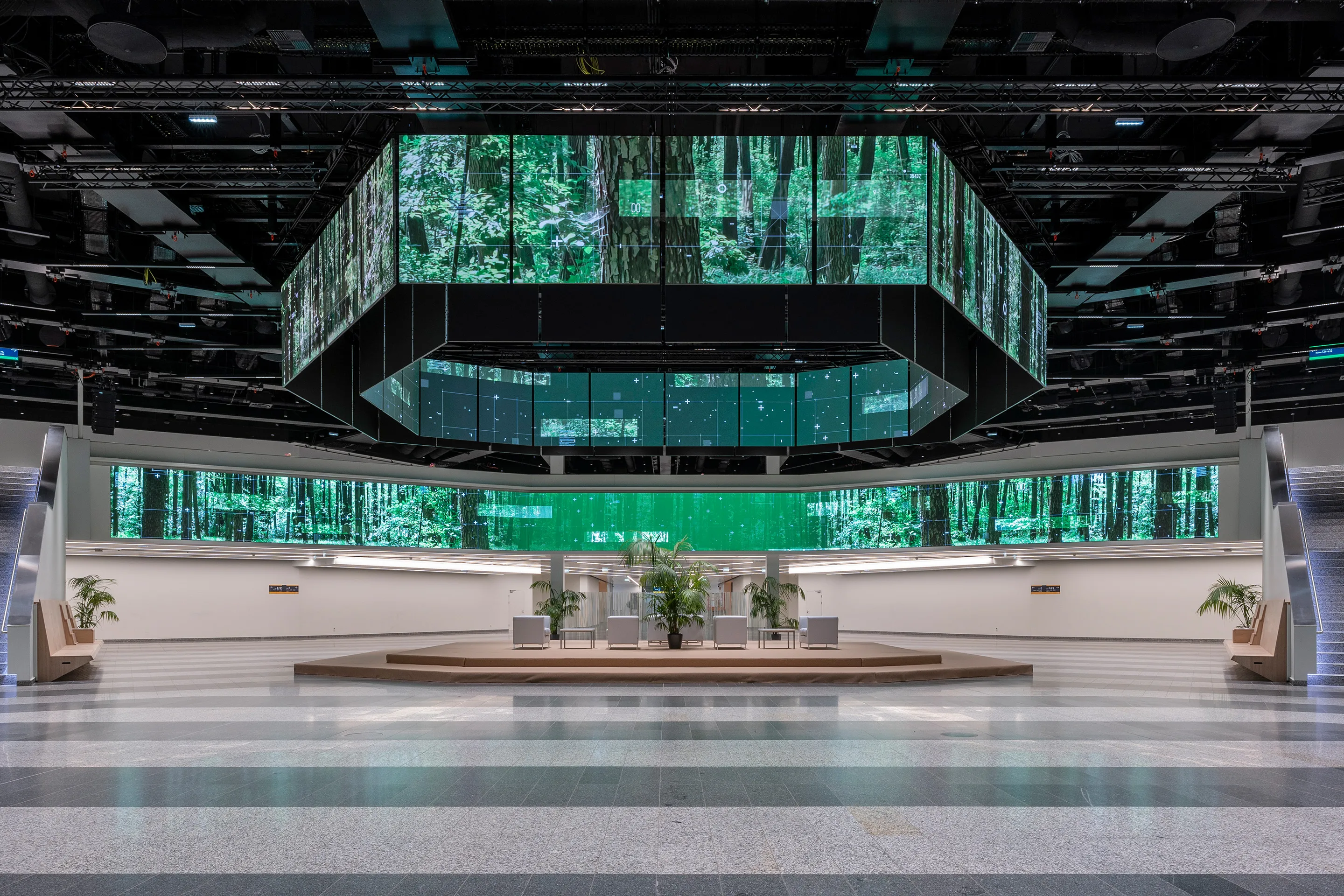
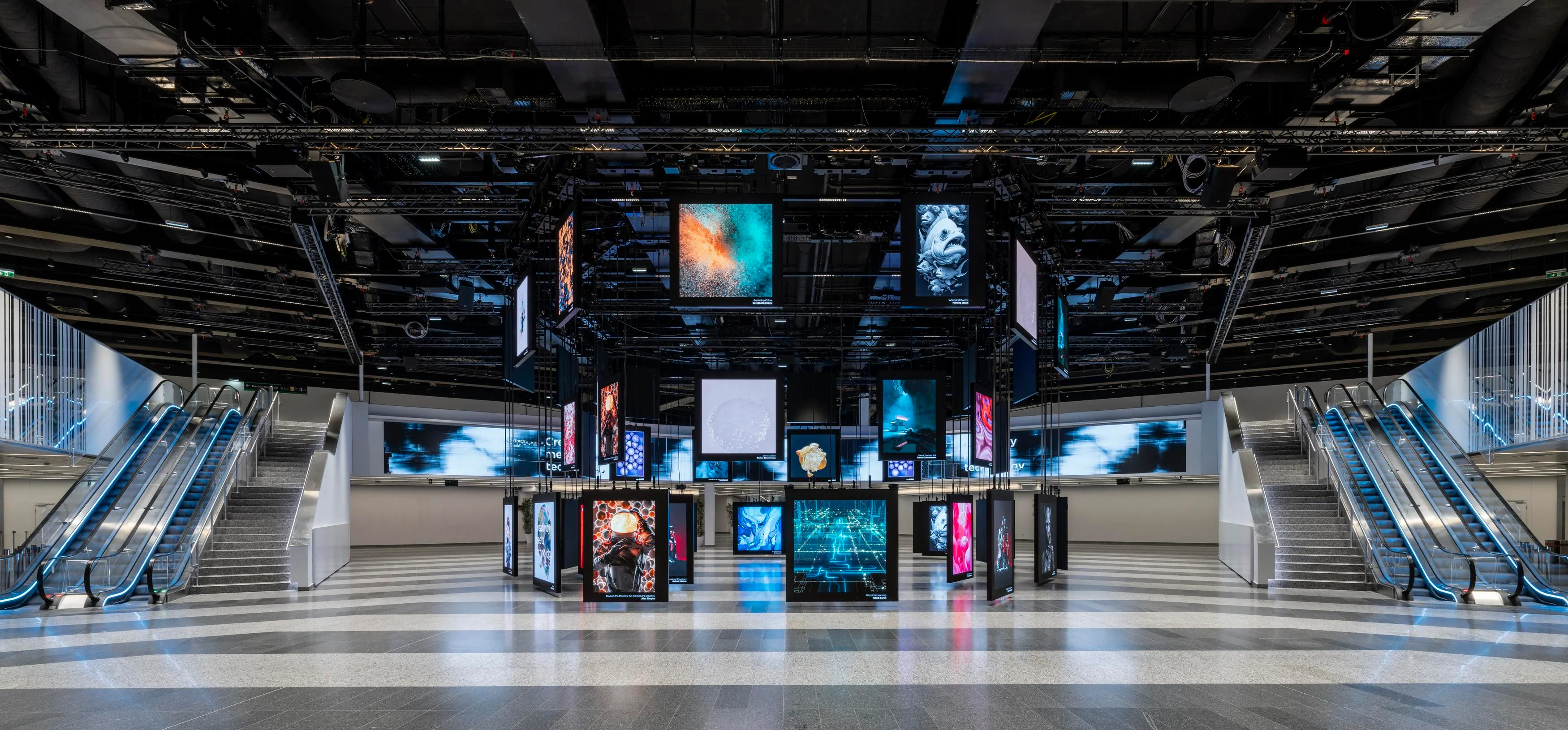
For international corporate planners, the practical case is straightforward. The venue handles 22,800 attendees at peak. It runs simultaneous translation as standard. It has 100 Mbit free WiFi infrastructure built for 20,000 people across 35,000 simultaneous connections. It's a certified Green Meeting partner. The polySTAGE in the entrance hall is Europe's largest movable LED installation, which gives sponsor brand activations and product launches genuine visual scale. Four hotels with 990 rooms sit in the immediate vicinity.
Good to know: This is a working congress centre, not a heritage venue, so the brief and the aesthetic need to match. If your event lives on imperial-Vienna atmospherics, the Hofburg or one of the palace venues is the right call.
Contact us for a tailored venue proposal!
5. Conference Center Laxenburg
Neighbourhood: Laxenburg, 15 km south of Vienna city centre
Capacity: 914 m² of state rooms plus a 374 m² Theatre Hall; up to 880 across all spaces; flagship Theatre Hall up to 350 theatre-style
Best for: International scientific symposia, multi-day off-site corporate retreats, formal gala dinners outside the city centre
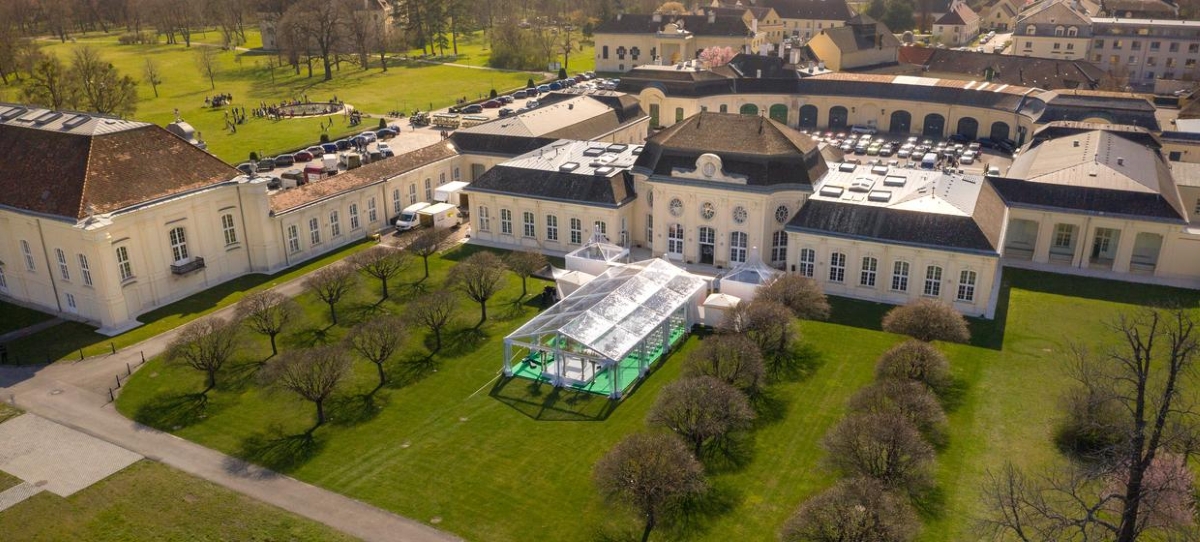
Laxenburg Palace was, after Schönbrunn and the Hofburg, the third major Habsburg residence — the imperial summer retreat where the court spent significant parts of each year. The Conference Center Laxenburg occupies the working part of the complex, opened to international corporate use, on the perimeter of an extensive palace park 15 km south of the city. The setting matters: this is one of the few options near Vienna where you can step out of a working session straight into 280 hectares of historical landscape garden.
The state rooms are imperial-grade and individually hireable. The Ovaler Saal (184 m², up to 200 cocktail) anchors the suite, with the two Marschallzimmer rooms (144 m² and 130 m²) and the Kaminzimmer (82 m²) extending it for breakouts or smaller working sessions. The Theatre Hall, where the imperial ensemble once performed for Maria Theresa, fits 350 theatre-style and works for plenary sessions, formal dinners, and award ceremonies. Three additional dedicated seminar rooms (the Maria Theresia, Franz Josef, and Kronprinz Rudolf rooms) cover the smaller-format end. Total capacity across indoor and outdoor space, including the festival meadow, runs to around 880.
For international corporate events specifically, two factors matter beyond the obvious heritage angle. The first is the location: international scientific institutions clustered around the palace include IIASA (the International Institute for Applied Systems Analysis), which makes Laxenburg a familiar destination for European research and policy audiences. The second is the sustainability infrastructure. The venue holds the Austrian Eco-label (Österreichisches Umweltzeichen) as a certified Green Location, which matters increasingly for international corporate clients with formal procurement criteria around event sustainability. Four EV charging stations on site.
Good to know: The 15 km distance from central Vienna is real. For a multi-day programme this is ideal because delegates settle into the palace setting; for a half-day event tacked onto a wider Vienna programme it adds logistical friction.

7. WestLicht
Neighbourhood: Neubau (7th district), Vienna's gallery and creative quarter
Capacity: Loft event space with 5-metre ceilings; sized for design-led receptions, dinners, and press events
Best for: Brand launches, press events tied to creative or technology audiences, exclusive sponsor receptions adjacent to a wider congress
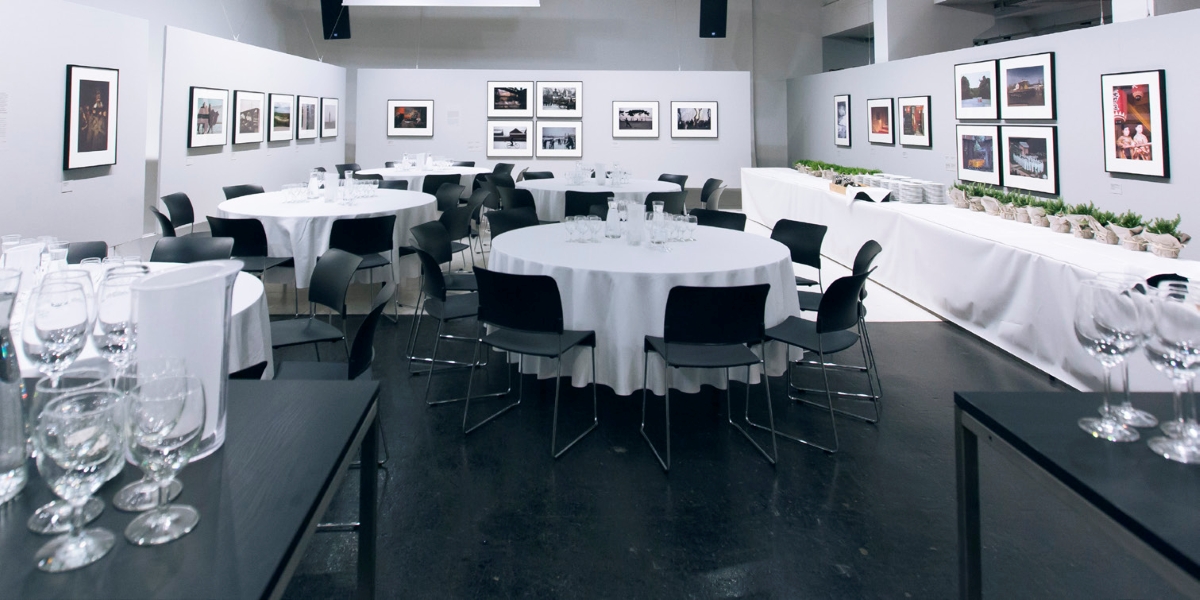
WestLicht sits in Vienna's 7th district, the Neubau gallery quarter, in a converted industrial building given over to a photography programme alongside dedicated event use. The 5-metre loft ceilings and the photographic exhibitions running through the space define the visual identity: this is a venue that codes "contemporary, creative, design-led" rather than "imperial Vienna." Black banquet chairs, white round tables, sleek buffet staging, and a lighting setup that runs from bright natural daylight through the large windows during the day to evocative interior lighting in the evening.
The format is flexible. The space handles seated dinners, standing cocktail receptions, product launches, press conferences, art galas, awards ceremonies, executive workshops, and dedicated conference programming, all in a single uncluttered open plan. The ceiling height combined with the open floor plan creates excellent acoustics for speeches and presentations, which matters more than people typically realise — the difference between a room where the audience can follow a keynote and one where the back third is checking email comes down largely to acoustics, and this venue has them.
For international corporate events, WestLicht is the smaller-scale satellite venue: the press event that runs the morning before a larger congress opens, the closing reception for an executive programme based primarily at one of the larger venues, or the brand activation tied to a creative-industry audience that responds to the photographic and gallery context. The Neubau location puts it within a walkable network of cafés, restaurants, and design shops that work well as informal extension of the event itself for international delegates with downtime around the formal programme.
Good to know: Capacity is on the smaller end of this list, suited to events of 50–150 rather than full-scale congresses. Confirm specifics during enquiry since the configuration adapts to event format.

Plan your Vienna International Corporate Event with Akommo
Vienna's identity as one of Europe's leading international meeting cities is built on the venues above. The Hofburg has hosted the OSCE. ACV runs alongside the UN headquarters as Austria's congress workhorse. Palais Coburg quietly handled the Iran nuclear talks. Laxenburg sits in the same orbit as IIASA. MQ Libelle, Mirage, and WestLicht each bring a distinct contemporary register to the city's offering, alongside the imperial heritage spaces that have shaped Vienna's reputation for centuries. The seven venues span the full range of formats, capacities, and atmospheres an international event planner is likely to need.
Choosing between them is the harder part. Capacity and budget are the obvious filters, but the more useful questions are around register (imperial Vienna versus international-city Vienna), audience profile (diplomatic discretion versus large-scale congress versus design-led creative industry), and how the venue fits into a wider multi-day programme alongside accommodation, transport, and supporting events.
That's where Akommo's team works. We've handled venue-finding, proposal coordination, and rate negotiation for international corporate events across all seven venues above and across Vienna's wider venue landscape, and we work on a contingency model: our service is free to clients because we're paid by the venues, never by you. What you get from working with us is faster shortlisting, real availability and pricing on your specific dates, hold management across multiple venues at once, and a single point of contact through the booking process rather than seven separate sales conversations.
Whether you're planning a 200-pax executive summit at Palais Coburg, a 5,000-attendee scientific congress at ACV, a gala dinner at the Hofburg, or a multi-format programme that combines several of the venues on this list, the starting point is the same: tell us the brief, and we come back with a tailored shortlist within 48 hours.
Get a free Vienna event proposal